Sérum Peptidique vs. Crème Peptidique : De quoi votre peau a-t-elle réellement besoin ?
La question du sérum peptidique contre crème est celle à laquelle tout investissement sérieux dans les soins de la peau finit par être confronté. Vous savez que les peptides sont importants pour la production de collagène et l'élasticité de la peau — mais l'étagère propose les deux formats, et la différence entre eux est rarement expliquée correctement. Un sérum est-il juste une crème plus légère ? Avez-vous besoin des deux ? Et si oui, dans quel ordre, et pourquoi ? Voici la science derrière ce que fait chacun, pourquoi les peaux matures bénéficient de leur utilisation conjointe, et exactement comment la séquence fonctionne.
Sérum peptide vs crème : quelle est la différence réelle ?
La différence ne porte pas sur la texture ou le luxe d'un produit sur la peau. Il s'agit de ce que chaque format est conçu pour faire, et de la profondeur de son action.
Comment un sérum peptidique pénètre la peau
Un sérum est conçu pour pénétrer en profondeur. Sa consistance est plus légère que celle d'une crème, spécifiquement pour permettre à ses ingrédients actifs de traverser la couche externe de la peau – celle que l'on peut voir et toucher – et d'atteindre la couche inférieure, où s'effectuent les véritables travaux de restructuration.
Cette couche plus profonde s'appelle le derme. C'est là que le collagène est fabriqué, que la peau obtient sa densité et son élasticité, et que les décisions concernant la fermeté future de votre peau sont prises. Un sérum peptidique délivre des instructions biologiques directement à ce niveau. Pensez-y comme à un message qui doit atteindre une adresse spécifique : le sérum est le coursier, et le derme est la destination.
La distinction entre sérum peptidique et crème se résume finalement à la profondeur, au moment et à la fonction biologique pour laquelle chaque format est conçu.
Comment une crème peptidique soutient la peau
Une crème agit différemment. Sa texture plus riche n'est pas seulement une question de confort — elle crée un sceau. Ce sceau fait deux choses importantes : il conserve les ingrédients actifs délivrés par le sérum, et il empêche l'humidité de s'évaporer de la peau avant qu'elle ne puisse faire effet.
Considérez le sérum comme la plantation de graines et la crème comme la terre qui les maintient en place. Sans la crème qui suit le sérum, une grande partie de ce que le sérum a apporté peut simplement se dissiper avant d'avoir eu le temps d'agir.
Il y a aussi un avantage de timing à la crème qui vaut la peine d'être compris. Pendant que vous dormez, votre peau entre dans sa phase de réparation la plus active. Le cortisol – l'hormone du stress qui supprime légèrement la réparation – chute à son plus bas niveau. Votre hormone de croissance atteint son pic. Votre peau devient plus réceptive aux ingrédients actifs qu'à tout autre moment de la journée. Une crème de nuit riche aux peptides n'est pas un luxe. C'est une décision de formulation prise autour d'une véritable fenêtre biologique qu'un produit de jour ne peut pas exploiter pleinement.
De quoi la peau mature a-t-elle réellement besoin des soins contenant des peptides ?
Le vieillissement cutané n'est pas un seul problème aux symptômes variés. C'est trois processus distincts qui se déroulent en même temps. Une formulation peptidique qui n'en adresse qu'un, ce que font la plupart, fait un travail partiel. Comprendre les trois est ce qui fait la différence entre une routine de soins de la peau qui gère la situation et une autre qui la transforme réellement.
La perte de collagène et pourquoi l'hydratation ne la résout pas
Le collagène est la protéine structurelle qui donne à la peau sa densité, son élasticité et sa capacité à reprendre sa forme après avoir été pressée. C'est ce qui donne à la peau un aspect plein plutôt que plat, reposé plutôt que fatigué. Il commence à décliner vers le milieu de la vingtaine, à peu près% par an — lentement au début, puis plus rapidement pendant la ménopause et avec des décennies d'exposition au soleil derrière vous.³
La recherche a mesuré une réduction de 68% de la production de collagène dans la peau des personnes âgées de 80 ans et plus par rapport à la peau de la vingtaine.³ Ce n’est pas de la sécheresse. Ce n’est pas quelque chose qu’un hydratant plus riche résout. C’est un effondrement du cadre structurel qu’aucune quantité d’hydratation ne remplace. L’hydratation est réelle et précieuse. Elle ne reconstruit tout simplement pas l’architecture.
Enzymes MMP : la dégradation du collagène que la plupart des produits ignorent
Voici la partie du vieillissement de la peau dont presque personne ne parle, ce qui est dommage car c'est sans doute la plus importante à traiter.
Votre peau contient des enzymes — appelées MMP — qui dégradent le collagène. Elles sont toujours présentes, mais l'exposition au soleil au fil du temps les rend considérablement hyperactives. Après des décennies d'exposition aux UV, même un soleil soigneusement géré, ces enzymes sont chroniquement élevées.⁴ Elles agissent en continu, dégradant les fibres de collagène qui maintiennent la structure de votre peau.
Le problème avec la plupart des soins anti-âge — même les bons soins anti-âge — est qu'ils se concentrent entièrement sur la stimulation de nouveau collagène sans rien faire concernant les enzymes qui détruisent le collagène que vous avez déjà. Si vous construisez du nouveau collagène d'un côté tout en perdant du collagène existant de l'autre, vous êtes sur un escalier mécanique inversé. Vous n'êtes peut-être pas en train de reculer. Mais vous ne faites pas les progrès que la liste des ingrédients suggère.
Une formulation peptidique qui comprend un ingrédient ciblant spécifiquement ces enzymes — en les inhibant à la source — change complètement la donne. Désormais, vous construisez et protégez simultanément. C'est à ce moment que le résultat net passe d'une perte ralentie à un gain réel.
Pourquoi le renouvellement cellulaire ralentit après 40 ans
Votre peau se renouvelle de l'intérieur vers l'extérieur. De nouvelles cellules se forment à la base, remontent vers la surface où elles desquament, laissant place à une peau plus jeune et plus éclatante en dessous. À vingt ans, ce cycle dure environ 28 jours. À soixante ans, il faut 45 à 60 jours, voire plus.⁵
Le résultat visible est le ternissement graduel et l'irrégularité qui s'accumulent à la surface. Le teint qui paraît terne sous certaines lumières. La texture que le correcteur améliore mais ne résout pas. Et une capacité réduite à récupérer proprement d'une semaine stressante, d'un long vol ou d'un excès de soleil. Accélérer ce processus de renouvellement — sans l'irritation causée par le rétinol — est l'une des choses les plus significatives qu'une formulation peptidique puisse faire pour la peau mature.
Les cinq peptides du complexe peptidique pour la peau que nous utilisons : ce que chacun fait et pourquoi il est dans le complexe hydro-liftant 5 peptides
Le complexe avancé 5-Peptide Hydro-Lifting que nous utilisons dans nos produits contient cinq peptides, chacun ayant une fonction complètement différente. Ils s'attaquent aux trois processus décrits ci-dessus — simultanément et sans irritation. C'est pourquoi le complexe apparaît à la même concentration de 4% dans le sérum, la crème de jour et la crème de nuit. Chaque produit du système effectue le même travail de réparation fondamentale, dans un format adapté au moment et à la manière dont la peau en a besoin.
L'Alternative au Rétinol — Myristoyl Tripeptide-31
Vous avez presque certainement une expérience avec le rétinol. Il fonctionne — le dossier clinique est long et bien établi.⁶ Il provoque également, en particulier sur la peau qui a traversé des changements hormonaux importants, des semaines de sensibilité, de rougeur et de perturbation avant de se stabiliser. Beaucoup de femmes dans la soixantaine ont simplement accepté le fait que le rétinol coûte plus cher qu’il ne rapporte à ce stade.
Ce peptide active le même processus de renouvellement de la peau que le rétinol — renouvellement cellulaire plus rapide, pores plus fins, surface plus fraîche, correction de l'aspect terne dû aux dommages solaires — par un mécanisme complètement différent. La sensibilité et la période d'adaptation que provoque le rétinol proviennent de sa liaison à un récepteur spécifique de la peau. Ce peptide ne se lie pas à ce récepteur. Il utilise une voie différente pour atteindre la même destination. Pas d'inflammation. Pas de semaines de peau réactive. Pas de protocole d'évitement du soleil. Juste un renouvellement constant et quotidien, dès la première application.
Si le rétinol vous a déjà causé plus de problèmes qu'il n'en valait la peine pour votre peau, voici pourquoi ce peptide se trouve dans le complexe.
Le Signal Réparateur — Myristoyl Tetrapeptide-6
Lorsque votre peau subit des dommages – dus aux UV, au stress, à la simple accumulation des décennies – l'une de ses principales réponses de réparation implique une protéine appelée TGF-β. TGF‑β Le (Transforming Growth Factor‑beta) est une famille de protéines de signalisation (cytokines) qui jouent un rôle central dans le contrôle de la croissance, de la différenciation, de la réparation des cellules et de leurs interactions avec leur environnement. Dans la peau spécifiquement, c'est l'un des principaux signaux “d'architecte” qui indique fibroblastes(les cellules structurelles principales du derme) pour fabriquer et remodeler le matrice extracellulaire (MEC)—collagène, fibronectine et autres protéines structurelles qui donnent à la peau sa fermeté, son élasticité et sa résilience. Son rôle est de relancer le travail des fibroblastes (les cellules qui produisent le collagène et les protéines structurelles), de reconstruire la matrice et de restaurer la barrière. Dans une peau jeune, cette réponse est rapide et robuste. Dans une peau mature, elle devient progressivement plus lente et moins efficace.
Si vous utilisez des soins de la peau avancés qui fonctionnent déjà selon ce principe, vous comprenez déjà le concept intuitivement : certains actifs haut de gamme sont conçus pour soutenir la réparation naturelle de la peau. La complication avec les soins à base de facteurs de croissance en général est que le TGF-β, en tant que molécule protéique complète, est trop volumineux pour traverser intacte la couche externe de la peau. Il ne peut pas atteindre les cellules qu'il doit activer.
Ce peptide est conçu pour imiter la partie spécifique du TGF-β qui se lie à ces cellules de réparation – apportant l'instruction sans nécessiter que la molécule entière fasse le chemin. Le signal de réparation arrive. Les fibroblastes répondent. La matrice structurale commence à se régénérer. C'est ce que nous voulons dire lorsque nous disons qu'il reconstruit la résilience que la peau mature a en partie perdue.
Le Protecteur de Collagène — Myristoyl Tetrapeptide-34
C'est le peptide que la plupart des formules omettent — et d'après la biologie ci-dessus, vous pouvez comprendre l'importance de son absence.
Sans un inhibiteur des enzymes MMP qui dégradent le collagène existant, toute production de collagène est partiellement compensée par une dégradation continue. Ce peptide inhibe sélectivement ces enzymes à la source.⁴ Il réduit également les rougeurs visibles associées au stress environnemental chronique — celui qui s'accumule discrètement au fil des années et reste dans la peau sous la forme d'une inflammation de base légère.
Associée au Palmitoyl Pentapeptide-4 ci-dessous, la combinaison fonctionne ainsi : l'un construit de nouveau collagène, l'autre protège le collagène existant. Monter un escalier roulant descendant devient comme marcher sur un escalier fixe. Les progrès sont réels et ils se cumulent avec le temps.
Le producteur de collagène — Palmitoyl Pentapeptide-4
C'est le peptide le plus étudié en soins cosmétiques de la peau. Sa séquence d'acides aminés est directement dérivée du bloc de construction du collagène de type I, le principal collagène structurel de la peau, ce qui signifie que vos fibroblastes le reconnaissent déjà et y répondent sans qu'on ait besoin de les stimuler.⁸
Lorsqu'il pénètre dans le derme, il signale la production simultanée de multiples types de collagène, accompagnée de précurseurs d'élastine et d'acide hyaluronique. Densité. Élasticité. Le rebond apporté par une peau véritablement hydratée et structurellement saine, plutôt que par une simple humidité de surface. Lors d'un essai clinique en double aveugle de 12 semaines – la norme de preuve la plus rigoureuse en recherche cosmétique – une réduction significative de la profondeur des rides et ridules a été confirmée à la fois par des mesures techniques et une analyse experte.⁸ La recherche a été répliquée indépendamment.
Si vous regardez la liste des ingrédients de tout produit anti-âge sérieux que vous utilisez actuellement et en lequel vous avez confiance, il y a de fortes chances que ce peptide s'y trouve. S'il n'y est pas, il vaut la peine de se demander pourquoi.
Le Peptide Éclaircissant — Leucinate de Méthyle et d'Undécylénoyle
Les taches brunes et le teint irrégulier, qui s'accumulent au fil des décennies d'exposition au soleil et de changements hormonaux, ne sont pas un problème de surface. Le processus qui les crée commence en profondeur, par un signal hormonal — l'alpha-MSH — qui donne pour instruction aux cellules responsables de la pigmentation (mélanocytes) de produire de la mélanine. Une enzyme appelée tyrosinase exécute ensuite cette instruction.
La plupart des produits éclaircissants – vitamine C, niacinamide, acide kojique – agissent une fois ce processus terminé, essayant de réduire la pigmentation déjà formée. Ce peptide agit avant qu'il ne commence. Il interfère avec le signal hormonal initial et inhibe l'enzyme qui l'exécuterait.⁹ Le résultat est une véritable réduction des taches existantes au fil du temps, et une prévention significative de nouvelles. C'est pourquoi le changement qu'il produit est perçu comme un véritable renouveau plutôt qu'un éclaircissement temporaire qui disparaît lorsque vous arrêtez d'utiliser le produit.
Sérum peptidique ou crème : lequel appliquer en premier ?
Quand il s'agit de choisir entre sérum peptidique et crème, la réponse est sérum d'abord, toujours — mais avec une étape avant l'un ou l'autre d'eux.
Le Sérum Bio Exfoliant Ultra Clarifiant est le sérum peptidique du système Sacra. Il contient le complexe de cinq peptides ainsi que 4% d'acide glycolique et s'utilise deux à trois soirs par semaine. Les soirs d'utilisation, il s'applique en premier, avant la crème. Tous les autres soirs et tous les matins, la crème peptidique s'applique seule.
La crème peptidique suit ensuite, en fonction du moment de la journée.
Le sérum peptidique ou la crème peptidique suit ensuite, selon le moment de la journée.
Pouvez-vous utiliser un sérum peptidique et une crème en même temps ?
Dans le débat sérum peptidique contre crème, la bonne réponse pour les peaux matures est les deux, utilisés en séquence — non pas comme des alternatives mais comme un système où chaque produit a un rôle spécifique.
Les matins : Le Sérum Énergisant d’abord, puis le Elixir Intense Bio Regenerative Day Cream. La Crème de Jour contient le complexe complet de cinq peptides, ainsi qu'un FPS à large spectre et une défense antioxydante grâce à la CoQ10 et à la vitamine E. Le FPS et le peptide Collagen Protector forment un partenariat biologique : le produit solaire empêche les UV de déclencher les enzymes MMP en premier lieu ; le peptide inhibe les enzymes elles-mêmes. Deux mécanismes s'attaquent simultanément au même problème d'érosion du collagène. Testé dermatologiquement, indice d'irritation zéro.
Les soirs d'exfoliation (deux à trois fois par semaine) : Le Sérum Bio Exfoliant Ultra Clarifiant. The exfoliating serum combines the full peptide complex with 4% glycolic acid — a gentle acid that accelerates the removal of dull, accumulated surface cells to reveal fresher skin and visibly reduce fine lines. The peptide complex is in the serum not for marketing reasons but because active exfoliation places temporary stress on the barrier, and the repair and protection peptides are there specifically to manage that. Exfoliation without structural support is biologically incomplete.
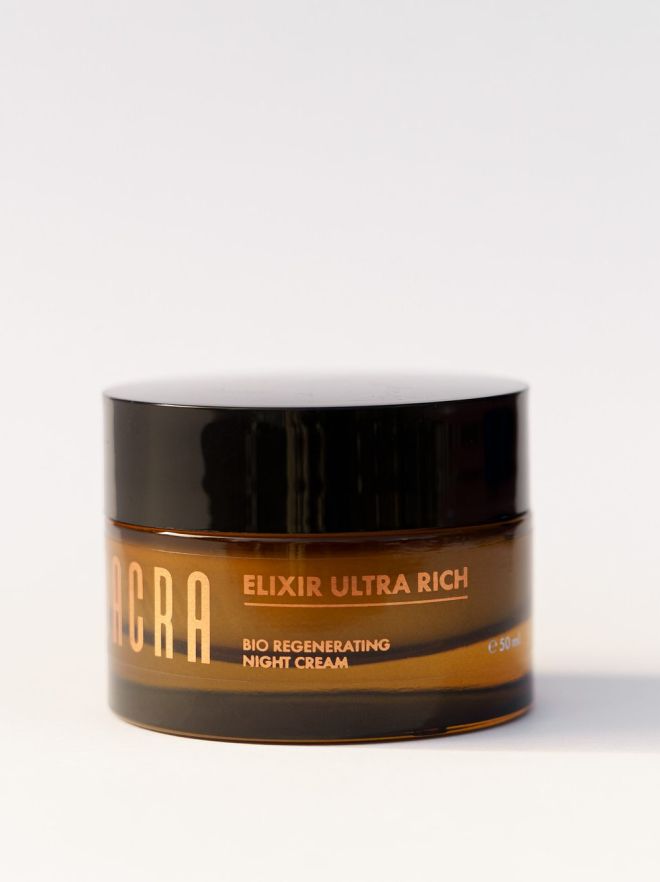
Le soir, continuez avec : Le Crème de nuit régénérante bio ultra-riche Elixir. La Crème de Nuit offre le même complexe peptidique complet dans une texture riche adaptée au travail de réparation nocturne de la peau, au moment où le cortisol est le plus bas et la peau la plus réceptive.
Combien de temps faut-il pour que les soins de la peau à base de peptides fassent effet ?
Plus rapide que ce que la plupart des gens attendent, et plus durable que ce que la plupart des produits offrent.
La texture de la surface et l'éclat de la peau s'améliorent généralement en trois à quatre semaines. Le sérum à l'acide glycolique en particulier a tendance à montrer un affinement visible des pores et du teint dans les deux à trois premières semaines d'utilisation — vous remarquerez probablement que votre peau paraît plus nette et plus lumineuse relativement rapidement.
Les changements plus profonds — fermeté restaurée, lifting sincère, réduction de la profondeur des rides qui donne à votre visage un aspect plus authentique — se développent sur six à huit semaines. C'est simplement ainsi que fonctionne le collagène. C'est une protéine structurelle qui s'accumule progressivement. On ne peut pas forcer la biologie, mais on peut lui faire confiance.
L'étude clinique du fournisseur d'ingrédients a confirmé des améliorations statistiquement significatives sur les six paramètres mesurés à huit semaines — profondeur des rides, élasticité de la peau, taille des pores, texture, pigmentation et résilience aux UV — avec zéro effet indésirable chez les 30 participantes.¹⁰
Les soins de la peau aux peptides conviennent-ils aux peaux sensibles ?
En général, oui — et pour les peaux qui sont devenues plus réactives avec le temps, les soins à base de peptides sont souvent l'approche anti-âge la plus intelligente disponible.
La raison est simple. Les peptides agissent en utilisant le langage que votre peau utilise déjà. Ils ne forcent pas la peau à se comporter différemment : ils amplifient ce qu'elle sait déjà faire. Ils n'agressent pas la barrière, ne déclenchent pas d'inflammation et ne nécessitent pas de période d'adaptation. Pour une peau qui a traversé des décennies de changements et qui a bien mérité d'être traitée avec intelligence plutôt qu'avec agressivité, cela est important.
La Crème de Jour et la Crème de Nuit sont toutes deux testées dermatologiquement avec un indice de non-irritation de zéro. Elles conviennent dès la première application.
Le sérum à l'acide glycolique est le produit qui mérite une introduction prudente sur les peaux sensibles ou réactives. Commencez une à deux fois par semaine. Suivez immédiatement avec Crème de Nuit pour sceller et apaiser la barrière pendant la nuit. Augmentez la fréquence progressivement à mesure que votre peau confirme qu'elle est à l'aise. Le complexe peptidique du sérum est spécialement conçu pour soutenir la peau pendant le processus de resurfaçage, mais l'acide glycolique doit toujours être introduit avec respect.
Prestations cliniques : Ce que montrent les données après huit semaines
Étude indépendante sur un fournisseur d'ingrédients. Trente femmes âgées de 30 à 60 ans. Le complexe pentapeptidique complet comme actif autonome à une concentration de 4%, appliqué deux fois par jour pendant huit semaines. Mesuré par des instruments cliniques – pas d'auto-évaluation, pas de photographies, pas de sensation. Des instruments qui quantifient le comportement réel de la peau avec un niveau de précision que la plupart d'entre nous associent à une clinique médicale plutôt qu'à un laboratoire de cosmétiques.
| Ce qui a été mesuré | Résultat |
|---|---|
| Profondeur des rides | ↓ 20–30% de réduction |
| Elasticité de la peau | Restauré de manière mesurable |
| Taille des pores visible | ↓ Réduit |
| Texture de surface | Régénéré |
| Pigmentation et taches | ↓ Réduit |
| Résilience aux UV | ↑ Amélioré |
| Effets indésirables | Zéro chez les 30 participants |
Voici les preuves qui rendent la question du sérum peptidique vs crème répondable par des données plutôt que par des préférences.
Un point de transparence que nous jugeons important : cette étude a été menée par le fournisseur de l'ingrédient sur le complexe peptidique en tant qu'actif autonome — et non spécifiquement sur les formulations Sacra. C'est la base de preuves pour l'ingrédient. Sacra intègre ce complexe à la même concentration étudiée de 4% dans trois produits. Nous déclarons cela clairement parce que nous pensons que vous préférez le savoir, et parce que la distinction entre les preuves de l'ingrédient et les preuves du produit n'est pas toujours clairement faite dans l'industrie des soins de la peau.
L'absence d'effets indésirables est le point final et peut-être le plus important pour quiconque lit ceci et dont la peau a beaucoup souffert. Les peptides agissent par les systèmes de récepteurs propres à la peau. Ils ne génèrent pas la charge inflammatoire qui impose une période de récupération avant que les résultats ne puissent commencer. L'anti-âge non irritant n'est pas un compromis sur l'efficacité. Pour une peau ayant des décennies d'histoire, c'est simplement l'approche la plus réfléchie.
Références scientifiques
- Maquart FX, et al. (1999). Régulation de l'activité cellulaire par la matrice extracellulaire : le concept des matrikines. J Soc Biol. 193(4-5):423-8. PubMed : https://pubmed.ncbi.nlm.nih.gov/10689625/
- Lintner K, Peschard O. (2000). Peptides biologiquement actifs : d'une curiosité de laboratoire à un produit de soin pour la peau fonctionnel. Int J Cosmet Sci. 22(3):207-18. PubMed : https://pubmed.ncbi.nlm.nih.gov/18503476/
- Varani J, et al. (2006). Diminution de la production de collagène dans la peau chronologiquement âgée. Am J Pathol. 168(6):1861-8.PubMed : https://pubmed.ncbi.nlm.nih.gov/16723701/
- Fisher GJ, et al (1997). Physiopathologie du vieillissement cutané prématuré induit par la lumière ultraviolette. N Engl J Med.337(20):1419-28. PubMed : https://pubmed.ncbi.nlm.nih.gov/9358139/
- Grove GL, Kligman AM. (1983). Changements dans le renouvellement des cellules épidermiques humaines associés à l'âge. J Gérontol. 38(2):137-42.PubMed : https://pubmed.ncbi.nlm.nih.gov/6827031/+1
- Kligman AM, et al. (1986). Trétinoïne topique pour la peau photodommagée. J Am Acad Dermatol. 15(4 Pt 2):836-59. PubMed :https://pubmed.ncbi.nlm.nih.gov/3771853/
- Roberts AB. (1995). Facteur de croissance transformant bêta : activité et efficacité dans les modèles animaux de cicatrisation des plaies.Réparation et régénération des plaies. 3(4):408-18. PubMed : https://pubmed.ncbi.nlm.nih.gov/17147652/
- Robinson LR, et al. (2005). Le palmitoyl pentapeptide topique améliore la peau du visage humain photodégradé. Int J Cosmet Sci. 27(3):155-60. PubMed : https://pubmed.ncbi.nlm.nih.gov/18492182/
- Gillbro JM, Olsson MJ. (2011). La mélanogenèse et les mécanismes des agents éclaircissants pour la peau — approches existantes et nouvelles. Int J Cosmet Sci. 33(3):210-21. PubMed : https://pubmed.ncbi.nlm.nih.gov/21265866/
- Fournisseur d'ingrédients, données cliniques indépendantes. Étude contrôlée en double aveugle, n=30 femmes âgées de 30 à 60 ans, application biquotidienne pendant 8 semaines à une concentration de%. Instruments : Coramètre®+Khazaka, VISIA® Complexion Analysis System, répliques de peau en silicone. Données déposées chez Sacra Cosmetics.