
Intelligence Régénérative : L'Avenir des Soins de la Peau Régénérateurs
Les soins de la peau régénératifs fondés sur des preuves objectives sont rares. À un moment donné de tout parcours sérieux de soins de la peau, vous cessez de vous intéresser à la sensation de quelque chose et commencez à vouloir savoir ce qu'il fait réellement. Vous avez investi assez, lu assez d'étiquettes et vu assez de belles photographies pour savoir que la sensation et l'action ne sont pas la même chose. La gamme de soins de la peau régénératifs Sacra a été conçue pour cette étape de la conversation – et voici la science et les données indépendantes qui la sous-tendent.
Qu'est-ce que les soins de la peau régénératifs ? Définir l'approche
L'expression Intelligence Régénérative décrit quelque chose de spécifique : les soins de la peau régénératifs agissent avec les systèmes de réparation de la peau plutôt qu'autour d'eux. La peau sait déjà comment reconstruire le collagène, restaurer sa barrière et renouveler sa surface. Les soins de la peau régénératifs lui redonnent le signal pour le faire. Ce qui change avec l'âge, ce n'est pas la capacité. C'est la force du signal. Les instructions de réparation deviennent plus faibles. La réponse cellulaire ralentit. L'écart entre les dommages subis et les dommages corrigés s'élargit, année après année, d'une manière qui finit par devenir visible.
Les soins de la peau régénérateurs envoient les signaux.
La science des soins régénérants pour la peau : les matricines expliquées
Sous la surface de votre peau se trouve une structure de soutien – un réseau de collagène, d'élastine et de protéines de soutien qui confère à la peau sa densité, son élasticité et sa capacité à retrouver sa forme lorsqu'elle est touchée. Lorsque ce squelette subit des dommages, quelque chose d'intéressant se produit. Il libère de minuscules fragments moléculaires – appelés matrikines – qui fonctionnent comme des signaux de détresse, voyageant vers les cellules voisines et leur ordonnant de commencer la réparation.¹
La peau a fonctionné ainsi toute sa vie. Les matrikines ne sont pas une invention de la science cosmétique. Elles sont le système de communication d'urgence propre à la peau – identifié et nommé par les recherches fondamentales de Maquart et al. en 1999, et étudié intensivement depuis des décennies.¹ Ce que fait la biotechnologie cutanée, c'est de les imiter. Les peptides conçus pour ressembler et se comporter comme les signaux matrikines de la peau peuvent, lorsqu'ils sont correctement formulés et délivrés, déclencher la même réponse de réparation. Les cellules reçoivent ce qu'elles interprètent comme leurs propres instructions. La production de collagène commence. La barrière se reconstruit. Le renouvellement s'accélère.
C'est l'intelligence dans l'Intelligence Régénérative. Pas artificielle. Biologique. La fluidité de la peau, parlée à nouveau.
Pourquoi les soins de la peau régénératifs sont-ils plus importants après 50 ans
Les recherches menées par Grove et Kligman ont établi un fait que toute personne attentive à sa peau dans la soixantaine reconnaît instinctivement : le cycle naturel de renouvellement de la peau, qui dure environ 28 jours dans la vingtaine, s'étend à 45 à 60 jours, voire plus, au fil des décennies.² Les signaux s'atténuent. La réponse ralentit. Rien ne s'arrête – cela prend juste plus de temps, et la surface de la peau le montre.
Les formulations Sacra utilisent des porteurs d'origine végétale biocompatibles provenant des Carpates transylvaniennes — une région d'une richesse botanique inhabituelle — pour délivrer des signaux peptidiques biotechnologiques sous une forme que la peau mature peut absorber et à laquelle elle peut répondre. Le but n'est pas de forcer la peau à adopter un comportement qu'elle a oublié. Il s'agit de restaurer l'intensité du signal qui lui permet de faire ce qu'elle sait déjà faire, à un rythme plus proche de celui qu'elle avait il y a trente ans.
Les soins de la peau régénératifs et l'avenir de la longévité de la peau
Les données de cette section proviennent d'une étude indépendante sur les appareils menée par un laboratoire indépendant. Il est utile de bien comprendre la différence entre ce type de test et les études de perception des consommateurs sur lesquelles la plupart des marques de soins de la peau s'appuient avant de lire les chiffres.
Lorsque qu'une marque demande aux participants si leur peau paraît mieux après avoir utilisé un produit, la réponse est influencée par tout : l'emballage, le prix, la texture, le parfum, la simple tendance humaine à croire que les choses chères fonctionnent. Ces études n'en sont pas dénuées de valeur — mais elles ne peuvent pas vous dire si les rides sont réellement moins profondes, si la barrière est véritablement plus forte, ou si la capacité de rétention d'hydratation de la peau a objectivement changé. Elles vous disent ce que les gens pensent qu'il s'est passé.
Les tests d'appareils vous indiquent ce qui s'est passé. Les instruments utilisés par le laboratoire mesurent des propriétés physiques et chimiques spécifiques de la peau — teneur en humidité, taux de perte d'eau, élasticité, pigmentation, topographie de surface — sans se soucier du résultat. Ils renvoient un nombre. Ce nombre confirme la déclaration ou non.⁸
Quantifier la montée d'hydratation : +19,69%
Le Elixir Intense Bio Regenerating Serum — onze huiles botaniques, sans complexe peptidique, dont le seul rôle est de reconstituer la matrice lipidique qui forme l'infrastructure d'hydratation propre à la peau — ont produit un 19,69% augmentation de l'hydratation de la peau à quatre semaines. C'est à ça que ressemble le soin de la peau régénératif lorsque les instruments le confirment.
L'instrument qui a mesuré cela fonctionne en faisant passer un signal électrique minuscule et imperceptible à travers la couche superficielle de la peau. L'humidité conduit l'électricité avec une précision qui varie directement avec la teneur en eau — plus le tissu est humide, plus la conduction est forte. C'est le même principe physique utilisé dans l'évaluation de l'hydratation médicale. Une amélioration de près de 20% de cette lecture signifie que la structure de la peau a réellement changé. Elle retient plus d'eau en elle-même, non pas parce que quelque chose se trouve temporairement à la surface, mais parce que sa propre capacité s'est améliorée.
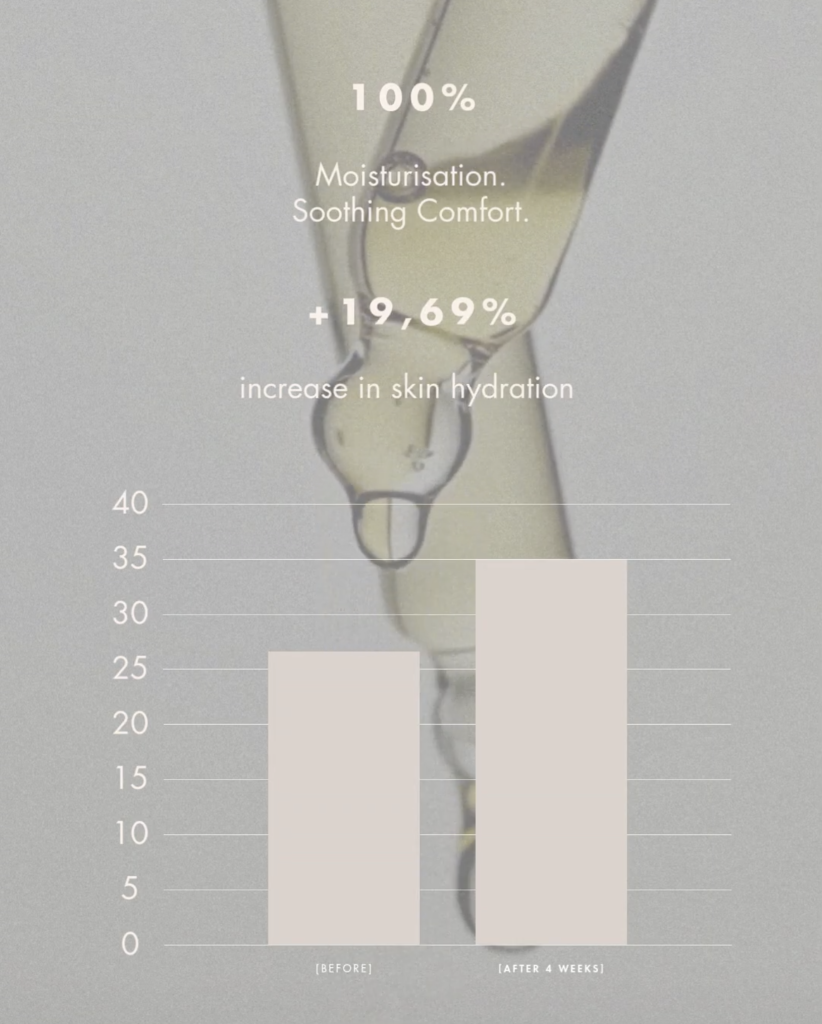
Pour les peaux matures, qui perdent progressivement la fonction barrière riche en lipides qui retient l'hydratation, il ne s'agit pas d'une amélioration cosmétique. C'est une amélioration structurelle.
Changements topographiques : réduction de la largeur et de la profondeur des rides
Les mesures des rides dans cette étude ont été effectuées à l'aide de répliques de peau en silicone – une technique où un composé de silicone est appliqué sur la surface de la peau et laissé durcir, créant ainsi un moulage tridimensionnel exact de chaque ligne, sillon et texture de la peau. Ce moulage est ensuite analysé par des instruments d'imagerie qui mesurent la profondeur et la largeur en microns, une empreinte physique de la surface de la peau, mesurée avec la précision d'un instrument d'ingénierie.
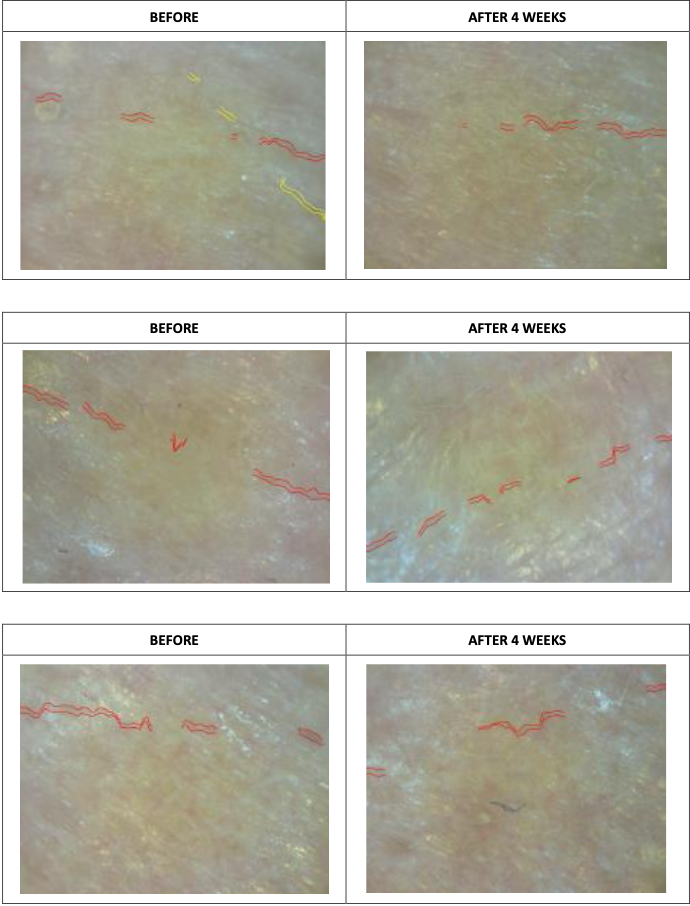
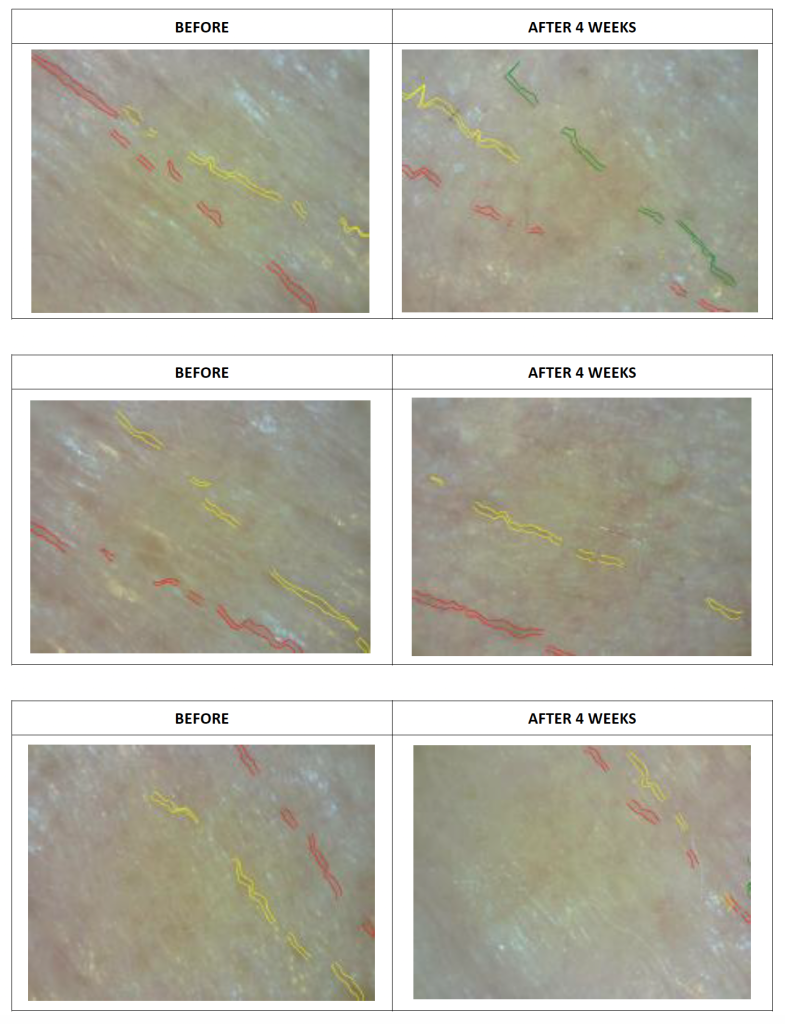
Il ne s'agit pas de photographies prises sous un éclairage flatteur, après avoir appliqué une crème hydratante et la nuit de sommeil qu'il faut. Ce sont des moulages physiques de la surface de la peau, mesurés avant et après une période d'utilisation constante du produit, par des scientifiques en laboratoire, sans aucun lien avec Sacra. Les rides sont mesurables et moins profondes. La surface de la peau a physiquement changé.
Améliorations biomécaniques : élasticité et résilience de la barrière
Le Elixir Intense Bio Regenerative Day Cream produit un +15,23% augmentation de l'élasticité de la peau, mesurée par un instrument qui applique une succion douce et contrôlée sur la peau et enregistre précisément à quelle vitesse et dans quelle mesure elle retrouve sa forme d'origine. Pensez-y comme à une pincée mesurée – du genre qu'un bon dermatologue pourrait utiliser pour évaluer la qualité de la peau du bout des doigts, rendue objective et reproductible par un instrument. Une amélioration de 15,23% signifie que la peau est physiquement plus résiliente. Elle retrouve plus complètement sa forme. C'est ce que signifie réellement la fermeté lorsqu'on la mesure plutôt qu'on ne la ressent.
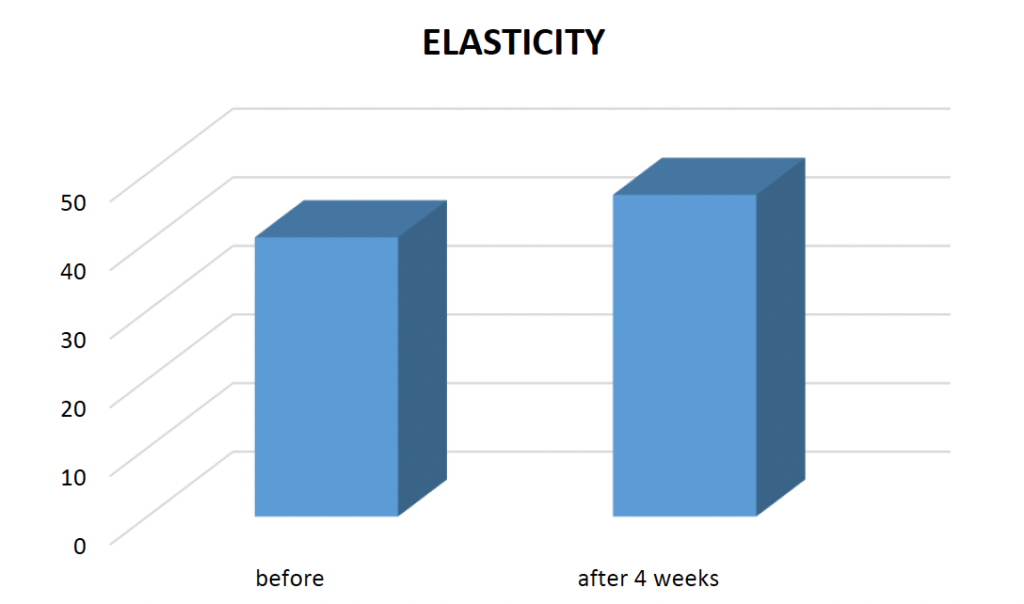
Le −9,19% diminution de la perte d'eau transépidermique raconte une histoire différente, mais tout aussi importante. La perte d'eau à travers la couche externe de la peau — le taux auquel l'humidité s'échappe dans l'air plutôt que d'être retenue — est mesurée par un instrument qui quantifie la vapeur d'eau à la surface de la peau. Le rôle de votre barrière est de ralentir ce processus. Lorsqu'elle est compromise par l'âge ou par des années de soins agressifs, l'humidité s'échappe plus rapidement que la peau ne peut la retenir. Une réduction de plus de 9% de ce taux de perte signifie que la barrière est devenue mesurable plus efficace. Pas seulement une sensation de confort accrue. Elle fonctionne réellement mieux, comme le confirme l'instrument qui mesure sa physique.
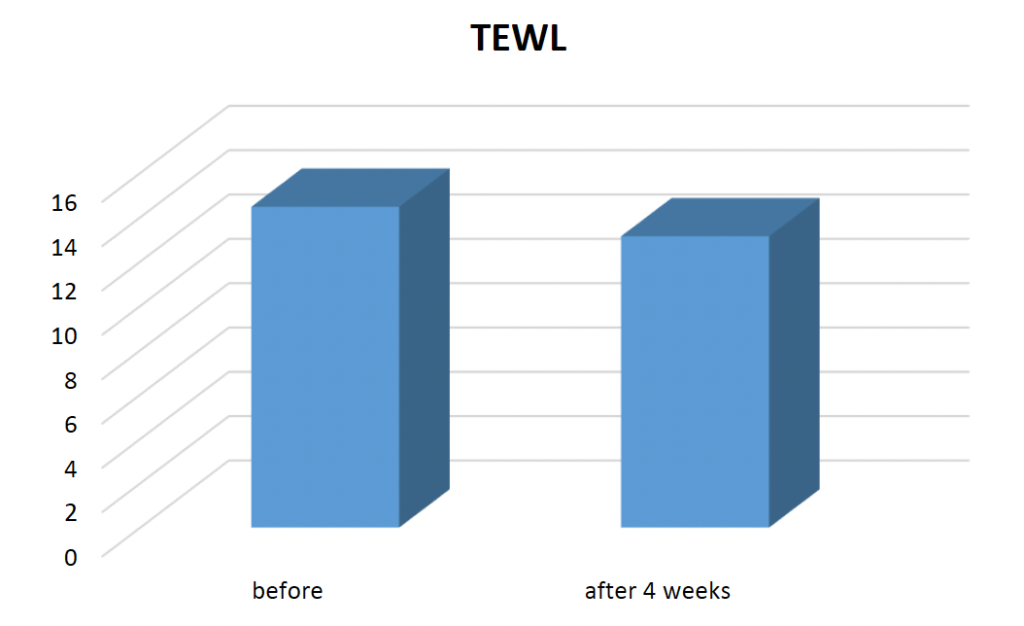
Le test de bio-exfoliation : Raffinement sans inflammation
La préoccupation concernant l'exfoliation acide — et elle est légitime, en particulier pour la peau qui est devenue plus réactive au fil des décennies — est que le resurfaçage a tendance à faire payer un tribut. Les exfoliants chimiques standards accélèrent le retrait des cellules de surface, ce qui est l'objectif, mais ce faisant, ils peuvent compromettre temporairement la barrière et laisser la peau plus sèche et plus sensible pendant plusieurs jours après. C'est un compromis que la plupart des personnes qui s'exfolient ont simplement accepté.
Les données instrumentales pour le Sérum Bio Exfoliant Ultra Clarifiant suggère que ce compromis n'est pas inévitable.
Éclaircissement instrumental et contraction des pores
La concentration de mélanine à la surface de la peau — le pigment qui s'accumule dans les taches brunes et le ton inégal après des décennies d'exposition au soleil — a diminué de −4,10%, mesurée par un instrument qui détecte le pigment par absorption de la lumière à la surface de la peau. Pas un éclaircissement perçu. Une réduction mesurable du pigment lui-même. Les taches sont plus claires parce qu'il y a objectivement moins de mélanine à cet endroit.
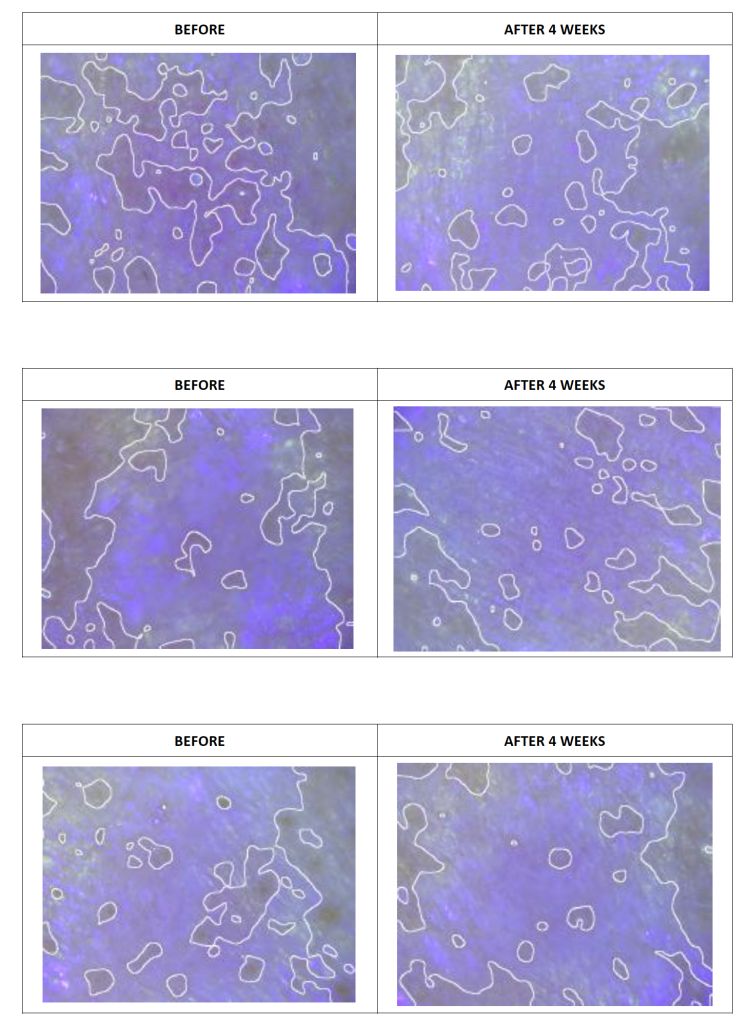
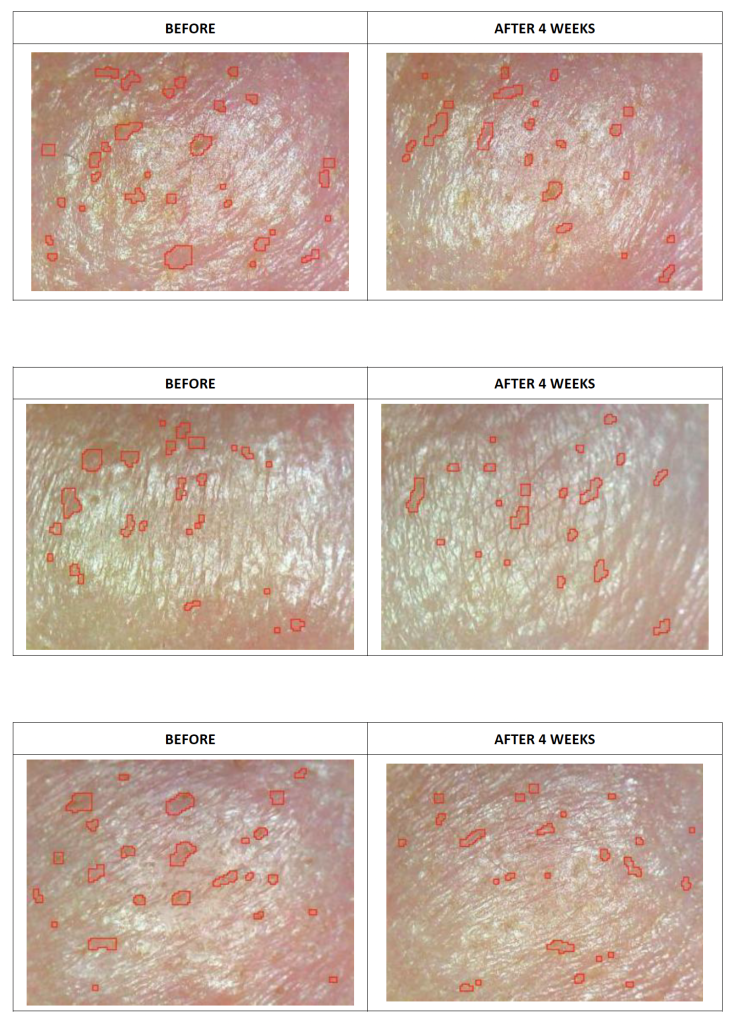
Visibilité des pores diminuée de −3,32%, confirmé par l'imagerie numérique de la surface de la peau. Les pores semblent élargis lorsque les cellules de surface accumulées s'y amassent — ce que l'acide glycolique à 4 %% corrige précisément en accélérant le processus naturel de desquamation. La mesure confirme que la surface de la peau est véritablement plus affinée.
Et puis le nombre qui nécessite une seconde lecture : a +12,38% augmentation de l'hydratation pendant la même période que l'exfoliation se déroulait.
Un produit exfoliant a augmenté l'hydratation de la peau de plus de 12%. Cela ne se produit pas avec les acides classiques, qui provoquent la déshydratation et la tension temporaires que toute personne ayant utilisé un tonique à l'acide glycolique connaît bien. Cela se produit ici parce que le complexe peptidique du sérum agit en parallèle direct avec l'acide glycolique – le peptide signal réparateur soutenant la restauration de la barrière épidermique à mesure que la peau se renouvelle, le peptide protecteur de collagène protégeant le derme du stress temporaire de l'exfoliation, le peptide de renouvellement cellulaire renforçant le renouvellement propre à la peau de l'intérieur, tandis que l'acide l'accélère depuis la surface. Le renouvellement se produit. Le soutien structurel se produit simultanément. La peau n'a pas à choisir entre les deux.
Application ou appareil : Pourquoi les tests objectifs sont importants
La fiabilité des métriques d'un laboratoire indépendant
Si vous avez déjà regardé un avant/après d'une marque de soins de la peau et ressenti un scepticisme raisonnable, ce scepticisme est bien placé. L'industrie de la beauté a une longue histoire de présentation de la perception comme preuve.
Le laboratoire avec lequel nous travaillons opère indépendamment des marques dont il teste les produits. Il utilise les instruments de diagnostic présents dans les services de recherche en dermatologie – des appareils qui mesurent des propriétés physiques spécifiques du tissu cutané avec l'objectivité d'un instrument de laboratoire, et non la subjectivité d'un groupe de discussion. Les données ou bien soutiennent l'affirmation, ou bien ne la soutiennent pas. Il n'y a pas de terrain intermédiaire où une photographie flatteuse et une question formulée avec empathie pourraient combler le vide.
Chaque mesure citée dans cet article provient de cette étude indépendante. Les pourcentages sont des relevés d'instruments, effectués avant et après une utilisation constante du produit, par des scientifiques qui n'avaient aucun intérêt dans ces relevés.⁸ C'est ce que nous voulons dire lorsque nous disons que l'affirmation d'Intelligence Régénératrice est soutenue par la physique plutôt que par des sentiments. Et c'est pourquoi nous présentons les données de cette manière plutôt que de vous demander de les croire simplement.
L'avenir de la longévité de la peau
Les clientes les plus exigeantes en matière de soins de la peau posent maintenant une question différente. Pas est-ce que cela fait du bien – mais que montre réellement la preuve ? La combinaison d'une belle formulation et d'une preuve clinique est plus rare qu'elle ne le devrait. Trouver les deux dans une même gamme est encore plus rare.
L'approche Sacra associe la signalisation biotechnologique — des peptides qui imitent les instructions de réparation des matrikines que la peau utilise déjà, réveillant la synthèse de collagène, la résilience de la barrière et le renouvellement cellulaire qui ralentissent avec l'âge mais ne s'arrêtent jamais complètement — et des preuves instrumentales indépendantes qui confirment que la biologie fait ce qu'elle prétend faire.
Une augmentation de 19,69% de l'hydratation. Une amélioration de 15,23% de l'élasticité. La profondeur et la largeur des rides mesurées et réduites. Une barrière qui retient l'humidité plus efficacement. Pigmentation mesurablement plus claire. Un sérum exfoliant qui resurface tout en augmentant simultanément l'hydratation. Ces chiffres n'ont pas été écrits par Sacra. Ils ont été renvoyés par des instruments opérés par des scientifiques indépendants dans un laboratoire de Cracovie, mesurant la peau ayant utilisé ces formulations de manière constante.
Pour une peau qui a des décennies d'histoire, ce niveau d'honnêteté est, au final, la chose la plus intelligente qu'une marque de soins de la peau puisse offrir.
photo principale : Alexander Krivitskiy sur unsplash
Références scientifiques
- Maquart F-X, Siméon A, Pasco S, Monboisse JC. (1999). Régulation de l'activité cellulaire par la matrice extracellulaire : le concept des matrikines. J Soc Biol, 193(4–5), 423–428. PMID: 10689625
- Grove GL, Kligman AM. (1983). Changements dans le renouvellement des cellules épidermiques humaines associés à l'âge. J Gérontol, 38(2), 137–142.PMID : 6827031 (ID corrigé)
- Varani J, Dame MK, Rittie L, et al. (2006). Diminution de la production de collagène dans la peau chronologiquement âgée. Am J Pathol, 168(6), 1861–1868. PMID: 16723701
- Fisher GJ, Wang Z-Q, Datta SC, et al. (1997). Physiopathologie du vieillissement cutané prématuré induit par la lumière ultraviolette. N Engl J Med, 337(20), 1419–1428. PMID : 9358139
- Lintner K, Peschard O. (2000). Peptides biologiquement actifs : d'une curiosité de laboratoire à un produit de soin pour la peau fonctionnel. Int J Cosmet Sci, 22(3), 207–218. PMID : 18503476
- Robinson LR, Fitzgerald NC, Doughty DG, et al. (2005). Le palmitoyl pentapeptide topique améliore la peau du visage humain photodégradé. Int J Cosmet Sci, 27(3), 155–160. PMID : 18492182
- Gillbro JM, Olsson MJ. (2011). La mélanogenèse et les mécanismes des agents éclaircissants pour la peau — approches existantes et nouvelles. Int J Cosmet Sci, 33(3), 210–221. PMID : 21265866
- SkinLab P.S.A., Cracovie. Étude d'appareils instrumentaux. Tests indépendants de formulations Sacra Cosmetics. Données conservées chez Sacra Cosmetics. (Données internes : aucun lien public disponible)


